

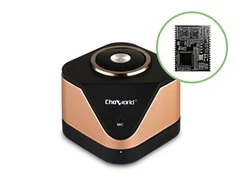


The wake-up types of offline voice modules mainly include keyword wake-up, where users can activate the voice module by saying specific keywords.
Voice control wake-up:
The voice chip realizes the wake-up function by detecting the sound signal in the environment. When a specific voice command or sound pattern is detected, the chip is awakened and starts to perform the corresponding operation.
Trigger wake-up:
The voice chip realizes the wake-up function by detecting physical trigger signals. For example, when a button is pressed or a touch sensor is touched, the chip is awakened and starts to perform the corresponding operation.
Voice recognition wake-up:
The voice chip realizes the wake-up function through the built-in voice recognition function. When a specific voice command is detected, the chip is awakened and starts to perform the corresponding operation.
Far-field sound wake-up:
Far-field sound wake-up is a technology that can detect sound signals at a longer distance. By using a multi-microphone array and signal processing algorithms, the voice chip can receive sound signals at a longer distance and realize the wake-up function.
Timing wake-up:
The voice chip can set the timing wake-up function to wake up the chip and perform the corresponding operation at the set time. This wake-up type is usually used in energy-saving and timed task application scenarios.External trigger wake-up:
The voice chip realizes the wake-up function through the trigger signal of the external device. For example, when the external sensor detects a specific change in the environment, the chip is awakened and starts to perform the corresponding operation.
These are some common types of voice chip wake-up. The specific selection depends on the application scenario and requirements. When designing and selecting a voice chip, factors such as the sensitivity of the wake-up method, power consumption, and cost need to be considered.